StackAudit
Overview
A review that tells a business which AI tools to buy, and shows its working.
Details
At a glance
- Project type
- Advisory product, two languages
- My role
- Defined what a review must contain to be trusted, designed the report, and built the product around it.
- Category
- Products
- Status
- In development2026
What I did
- Decided what a recommendation has to show before it may be made
- Designed the report: twelve sections, ending in assumptions and sources
- Built the review flow and the report it produces, in Norwegian and English
- Set the rule that every estimate carries how certain it is
Next project
Wisr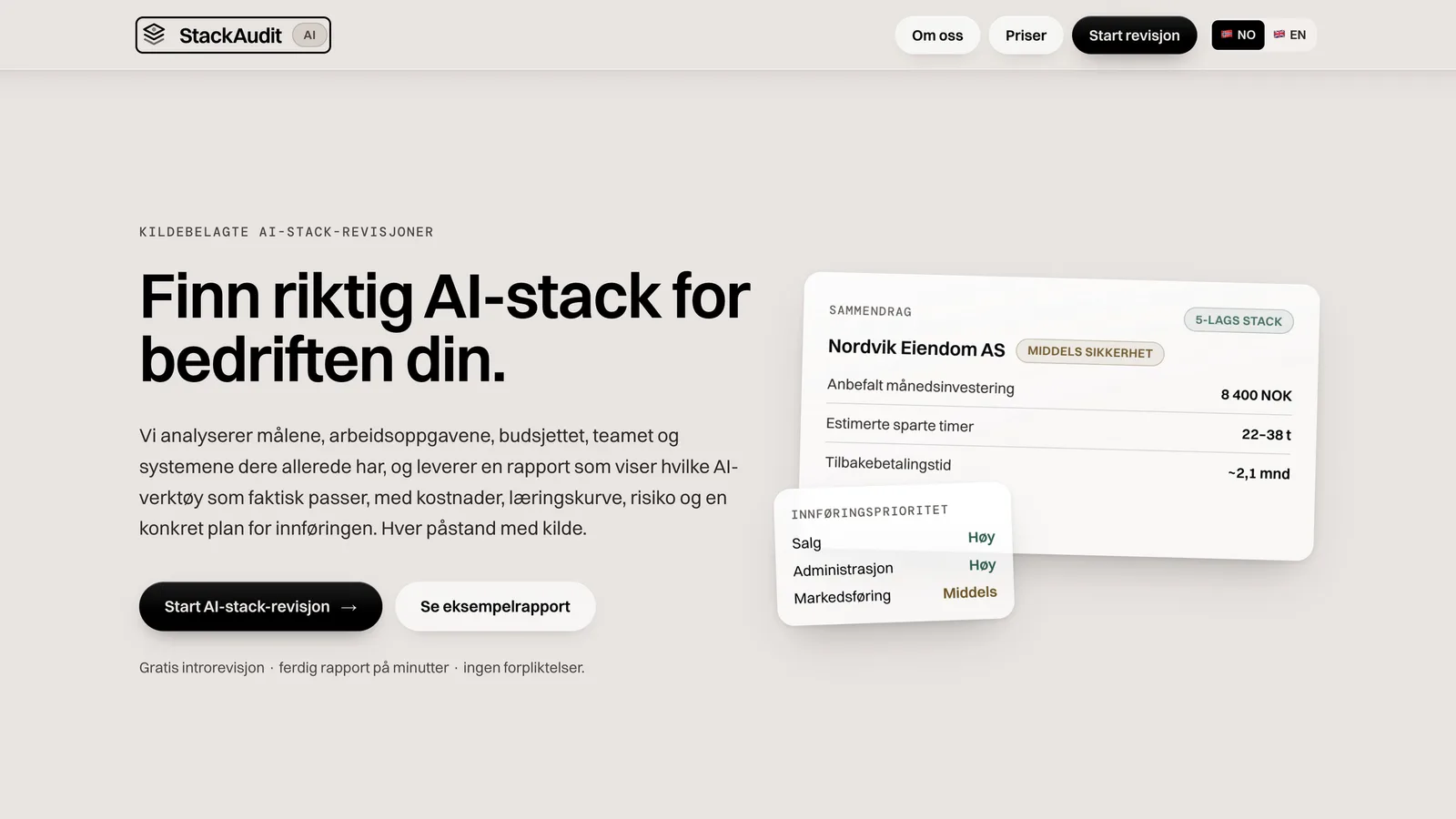
The need
A small business is told, constantly, that it should be using AI. What it is not told is which of the two hundred tools, at what cost, in what order, or what happens to the people who have to learn them.
The advice that does exist comes in two shapes. A consultant, at consultant prices, or a comparison site that is paid by the tools it ranks. Neither shows its working, so neither can be checked.
What comes out
A review reads the company's own material and produces a report in twelve parts. It opens with a summary and the figures, and it ends, deliberately, with the assumptions and the sources.
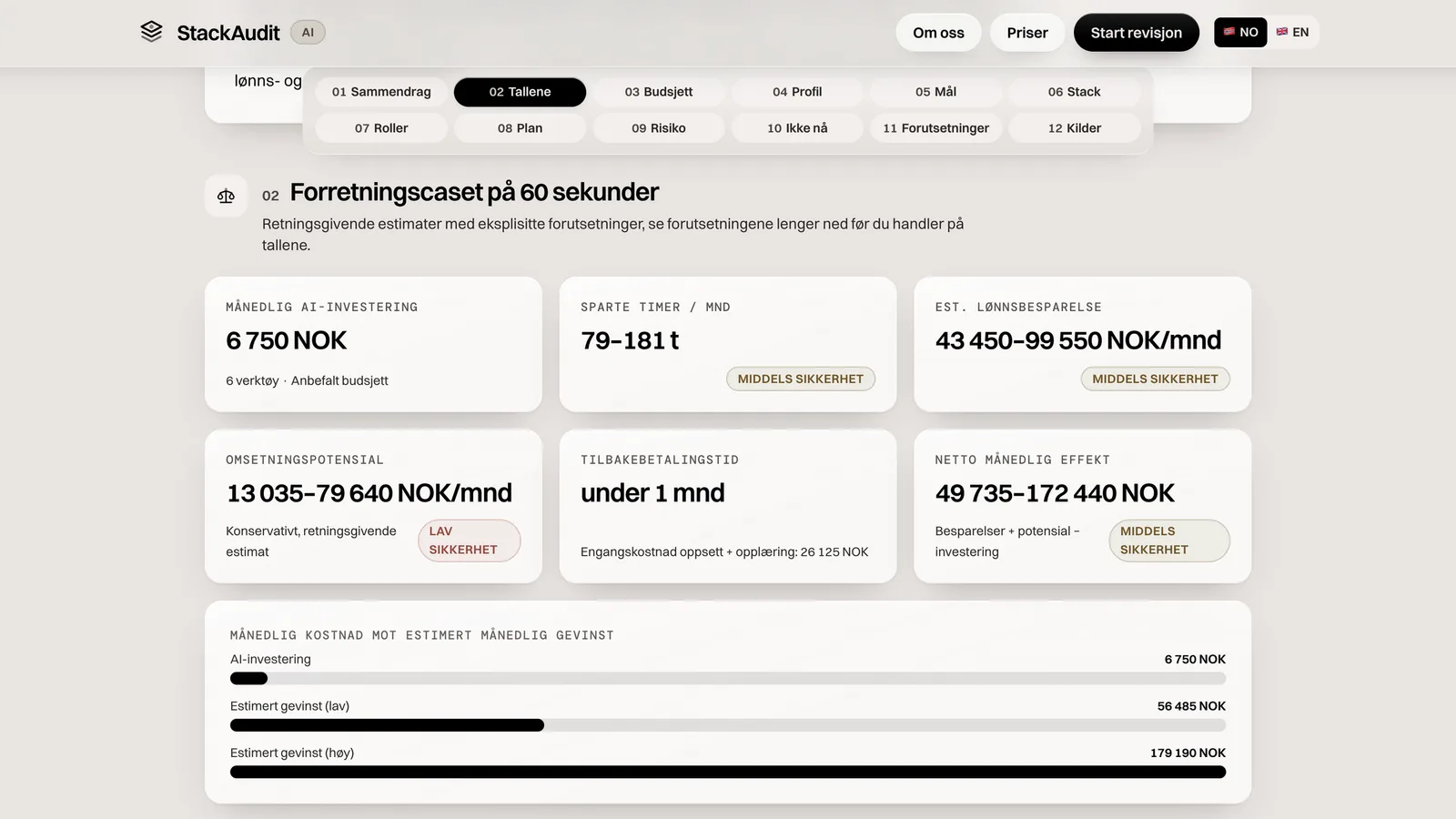
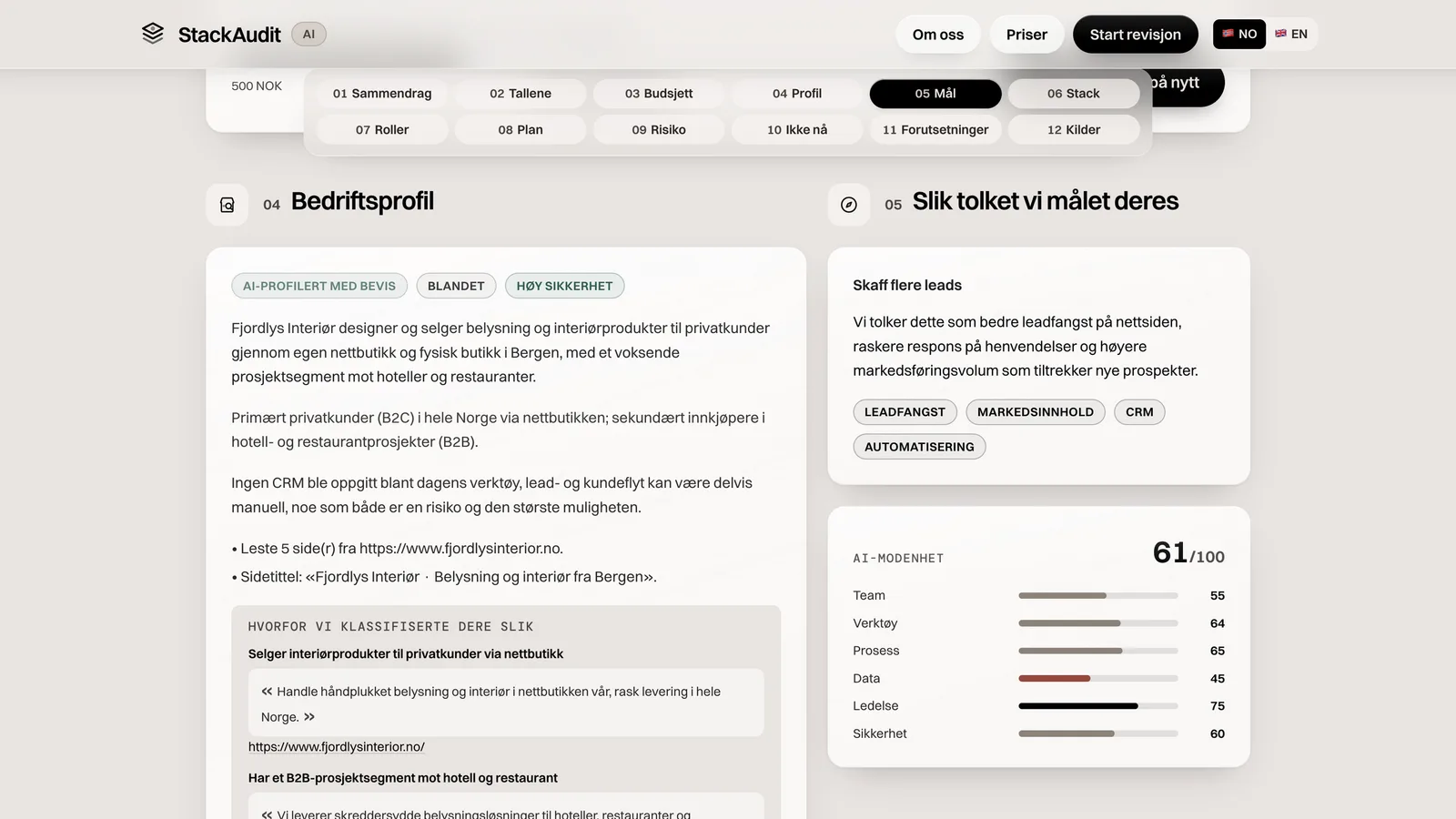
In between: the profile it built of the business and how it read the goals, a maturity score across team, tools, process, data, leadership and security; a recommended set of tools chosen against those goals rather than from a catalogue; budget scenarios; a plan per role, framed as what each team has to learn rather than what they have to buy; a rollout over thirty, sixty and ninety days; the risks; and a section for what should wait.
Decision
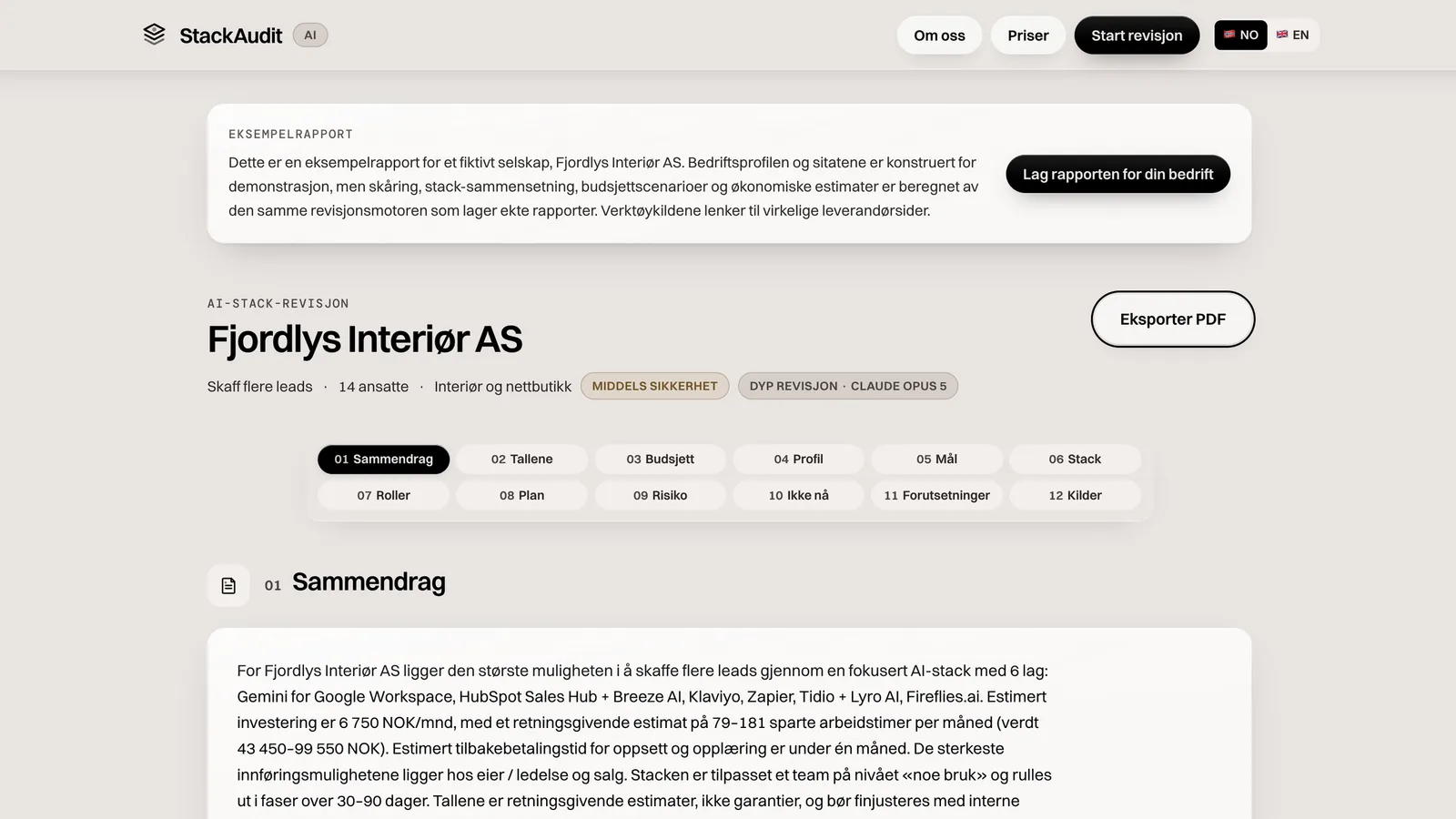
Every number says how certain it is
- Context
- The figures a business decides on cannot be known in advance: hours saved, wage cost avoided, payback time. A tool that prints them as facts is guessing with a confident face, and the reader has no way to tell which numbers to lean on.
- What I decided
- Each figure is labelled with its own confidence, high, medium or low, and the assumptions behind it are a numbered section of the report rather than a footnote. The wording is indicative estimates, not guarantees, and the report says outright that the numbers should be adjusted against the company's own internal figures.
- Trade-off
- A confident single number sells better than a range with a caveat on it. But this report is read by the person who has to defend the spend to somebody else, and a number they cannot explain is worse to them than no number at all.
Decision
Transparent recommendations, not hidden rankings
- Context
- The obvious way to make money here is affiliate revenue, and the obvious consequence is that the ranking stops being about the customer. Nobody reading it can tell the difference, which is precisely why the whole category is distrusted.
- What I decided
- The scoring is shown, not just the result. Every tool exposes the basis it was scored on, prices and claims link to the vendor's own pages, and the report includes the tools that were considered and rejected, with the reason for each.
- Trade-off
- Publishing the rejections invites an argument about them, and showing the scoring means it has to be defensible. That is the correct amount of pressure to be under when a business is about to act on the answer.
A plan, not a list
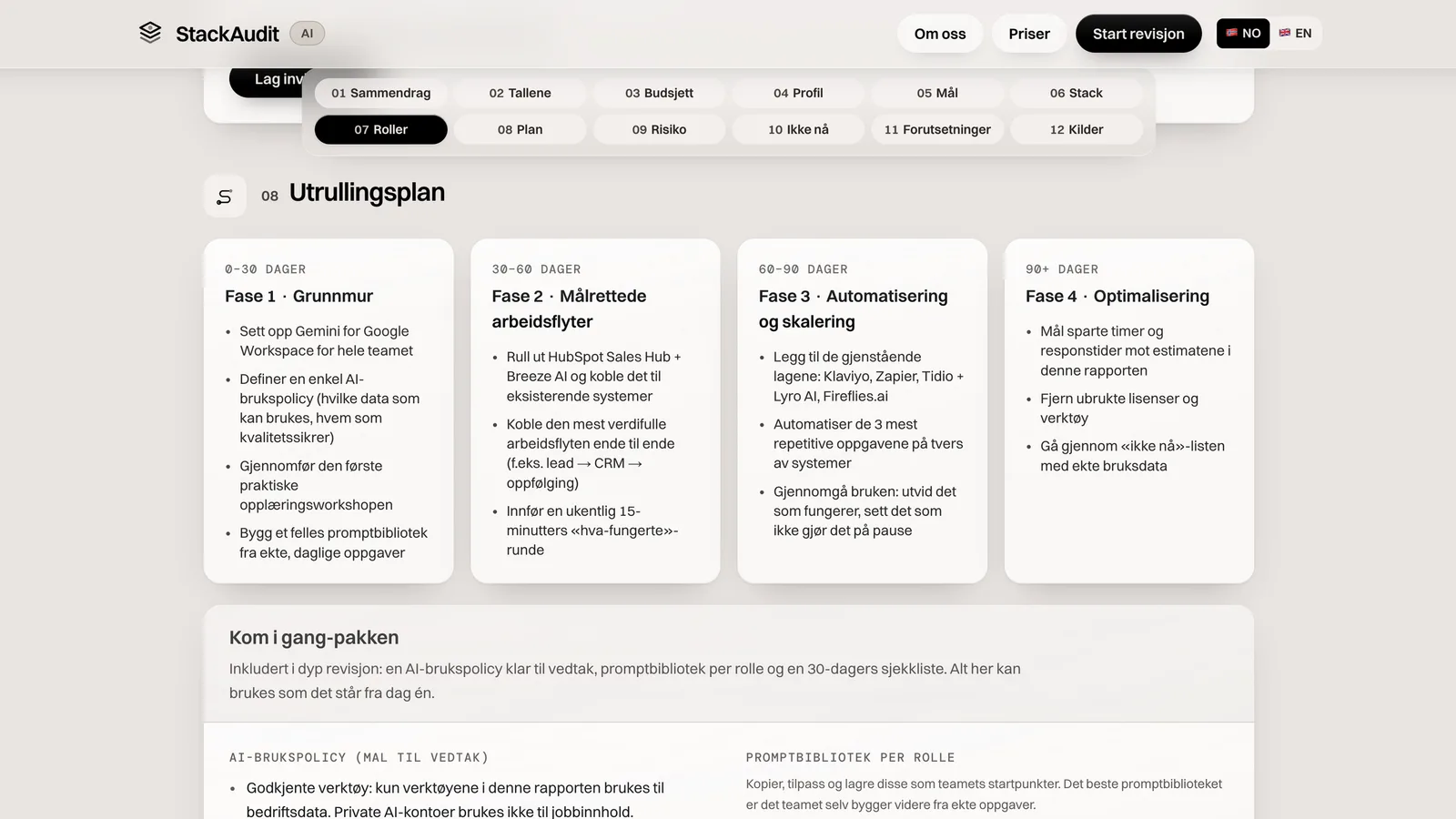
The part most likely to be acted on is the last one people expect: the rollout. Four phases across ninety days, starting with groundwork that costs almost nothing, then the two or three workflows where the time actually goes, then automation, then a review of what is and is not being used.
It ends with a getting-started pack, because a recommendation nobody has time to start is the same as no recommendation: an acceptable-use policy the leadership can adopt, a prompt library per role, and a thirty-day checklist.
Where it stands
The product runs end to end: a company is read, a report is produced in both languages, and it exports as a document somebody can take into a meeting. An example report is published so a visitor can see exactly what they would get before giving anything.
It is in development. What the project is arguing is narrow and, I think, correct: in a market where every recommendation is suspected of being paid for, the only durable product is the one that shows its working and publishes what it turned down.